The boundaries between physical and digital space are disappearing, and this change opens up entirely new ways of presenting, testing, and refining ideas in the design space. Once-futuristic concepts like the metaverse, mirrorworlds, and digital twins are quickly becoming integral to how forward-thinking professionals today collaborate with clients, visualize spaces, and streamline projects. If you’re still using mood boards and physical mockups alone, now might be the time to brush up on these concepts.
This week, Interior Design 411 takes a closer look at the most sophisticated simulative tech shaping the future of interiors.
Virtual Staging 2.0
Traditional virtual staging tools have already helped designers and realtors present furnished spaces without physical inventory. But 3D and real-time rendering tools are taking that further. High-fidelity staging through platforms like Unreal Engine or Twinmotion allows you to show realistic lighting changes, subtle material shifts, and layout options interactively.
Clients can explore multiple concepts within minutes, even changing finishes on the fly. These tools give clients a sense of presence and personalization in the design process from the start, and that emotional engagement is often what gets approvals faster.
Your Design in Their Hands
Augmented reality is now part of everyday consumer tech, and interior designers are starting to use it seriously. Apps like IKEA Place or Morpholio AR Sketchwalk were just the beginning. Today’s AR tools, like Apple Vision Pro and emerging AR glasses integrations, allow you to project your designs into a client’s actual environment through their own phone or tablet.
This is especially useful for layout validation and scale accuracy. You can walk a room with a client while showing how new millwork will align with existing architecture or where a lighting system will run. Used right, AR enhances in-person consultations, bringing immediacy to abstract concepts and helping everyone see the same thing at the same time. AR can reduce miscommunication significantly.
Selling the Vision Before It’s Built
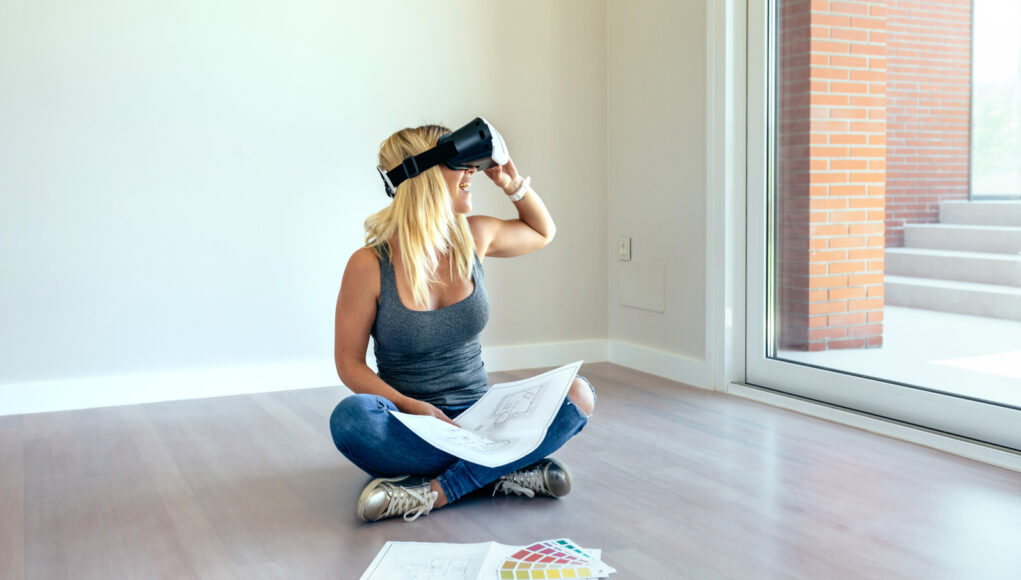
Virtual walkthroughs are making static renderings of the past feel like ancient relics. VR platforms today like Enscape give designers the ability to create immersive presentations where clients can walk room to room, experience ceiling height, and understand how natural light affects the space across time before any physical construction begins.
For complex commercial or hospitality projects, walkthroughs can be layered with interactivity, allowing real-time annotations and changes during live client sessions. It’s a powerful tool allowing you to cut down on revisions, clarify intent, and get buy-in faster. And if you’re dealing with high-end or international clients, it eliminates logistical bottlenecks. They don’t need to visit the space to approve a layout anymore. They can just inhabit it virtually.
Refining Design in Real Time
A digital twin isn’t just a 3D model. It’s a living, evolving replica of a physical space, often enriched with data from IoT devices, sensors, or behavioral analytics, that can not only help visualize how a space will look but also how it will function. For interior designers working in commercial or public spaces, digital twins allow you to track how a space is used in real time and use that data to refine your designs.
Want to know where foot traffic concentrates in a lobby or which seating area in a co-working space is underused? A digital twin can tell you. You can simulate changes and instantly assess the impact on usability, energy consumption, or acoustics. For sustainable design consultants or workplace strategists, this is a game-changer.
And designers aren’t just using these tools to sell ideas. They’re using them to debug and troubleshoot. A digital twin can help you catch spatial conflicts, assess material choices in context, and simulate wear patterns or flow before anything is ever built.
New Markets, New Mediums
The metaverse isn’t just for gamers anymore. Virtual environments are becoming branded destinations, showrooms, and social hubs, with companies commissioning interior designers to craft virtual environments in platforms like Decentraland or Roblox. These are legitimate projects with real budgets.
Mirrorworlds, by contrast, aim to replicate the real world in 1:1 digital fidelity. Think of Google Earth but updated in real time and interactable. Designers could eventually test their designs in the exact digital replica of the building or city block where it will live. This has implications for urban designers and those working on adaptive reuse or heritage projects.
Where You Fit in the Mirrorworld
Adopting these tools doesn’t mean becoming a tech expert. But it does mean integrating digital literacy into your design process. Whether you’re presenting to a high-end residential client or planning a public installation, being able to show your ideas dynamically makes your process more persuasive and your work more adaptable.
The future of design is layered, data-driven, and increasingly immersive, and the earlier you get fluent in these tools, the more competitive you’ll be. Welcome to the era of spatial intelligence. Your design process just got its own twin — and it’s about to make you faster, smarter, and more convincing than ever.
Tech Tune-Up: More Resources To Explore
Not sure where to start? Dive deeper with these vetted tools and learning hubs:
Visualization & Collaboration Platforms
- Twinmotion: Real-time rendering built on Unreal Engine, optimized for interiors and architectural walkthroughs.
- Enscape: Trusted rendering plugin for SketchUp, Revit, Rhino, and more. Ideal for client presentations and VR-ready walkthroughs.
- Morpholio Suite: Mobile-friendly tools like Trace and Board, tailored to concept development, AR sketching, and digital presentations.
Courses & Training
- LinkedIn Learning: Try “AR/VR in Interior Design,” “Unreal Engine for AEC,” or “SketchUp for Interior Design.”
- Unreal Engine Training: This 10-part course takes users of any skill level throughout the whole process of creating high quality interior stills and animations.
- Harvard GSD Executive Education: Short-format courses covering spatial computing, adaptive reuse, and data-enhanced environments.