Designers are tuning kitchen and bath spaces to feel grounded, useful, and expressive. A recent Atlas Homewares report points to kitchens moving away from high-contrast minimalism, and the latest product launches from the 2026 Kitchen & Bath Industry Show (KBIS) reinforce this. Across the show floor, manufacturers leaned into warmer materials, sculptural forms, and performance-driven technology designed to disappear into the background.
This week, Interior Design 411 takes a look at the kitchen and bath specs your clients are craving now.
Nature-Led Design
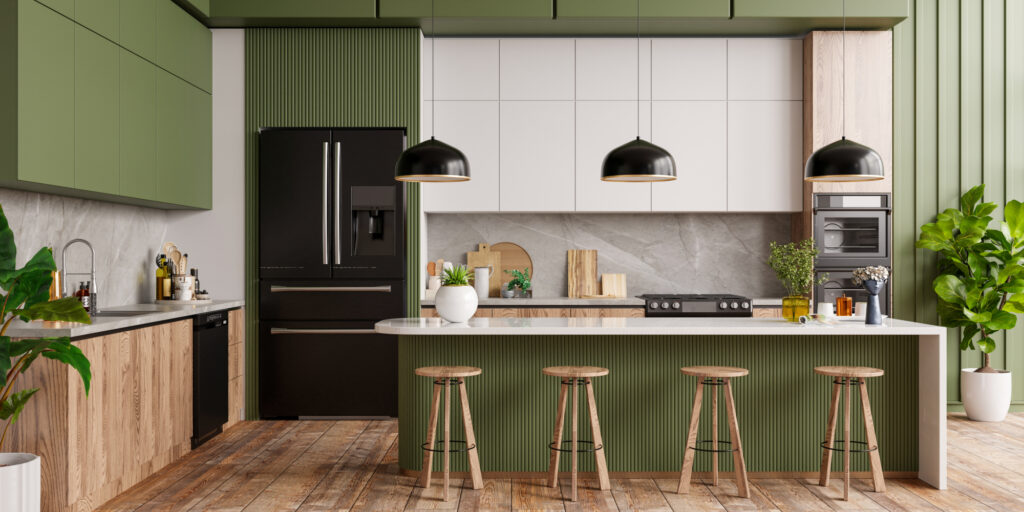
Earth tones are everywhere, but the most sophisticated applications feel restrained, deliberate, and supported by traditional architecture. Cabinetry, tall pantry walls, secondary islands, and even integrated appliance panels are taking on soft greens, muted blues, and warm wood tones to create visual calm across large surfaces.
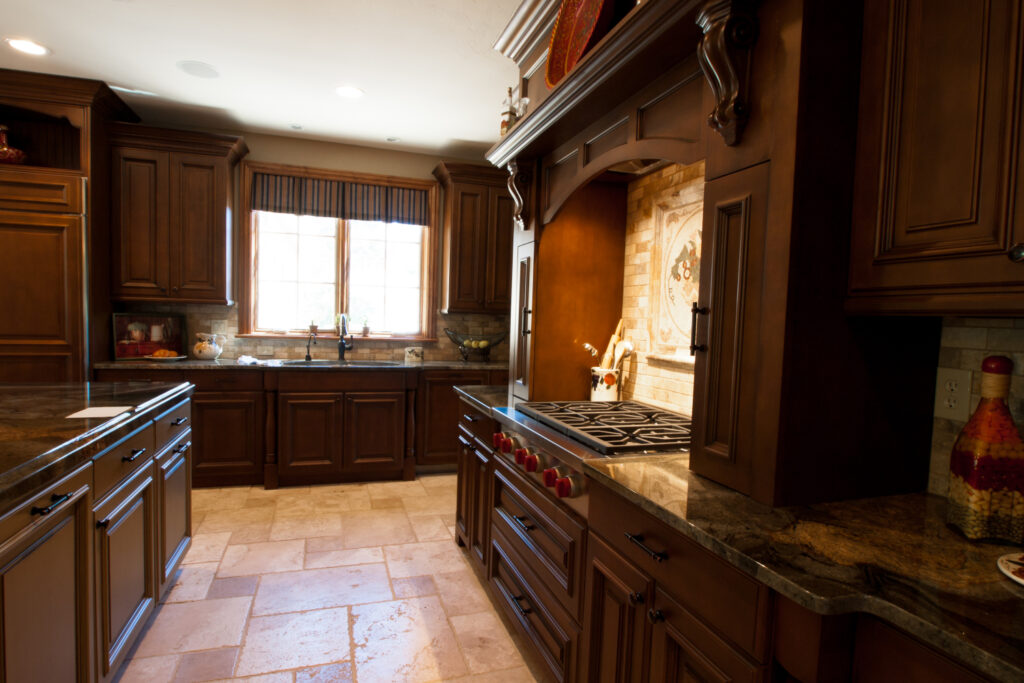
At KBIS, cabinetry brands showcased rich browns like Fabuwood’s new Truffle finish and James Martin’s pecan-toned vanities, reflecting the broader move toward deeper, more expressive woods. Native Trails expanded its Winemaker collection, crafted from reclaimed wine-seasoned oak staves, bringing rich material stories directly into the bathroom.
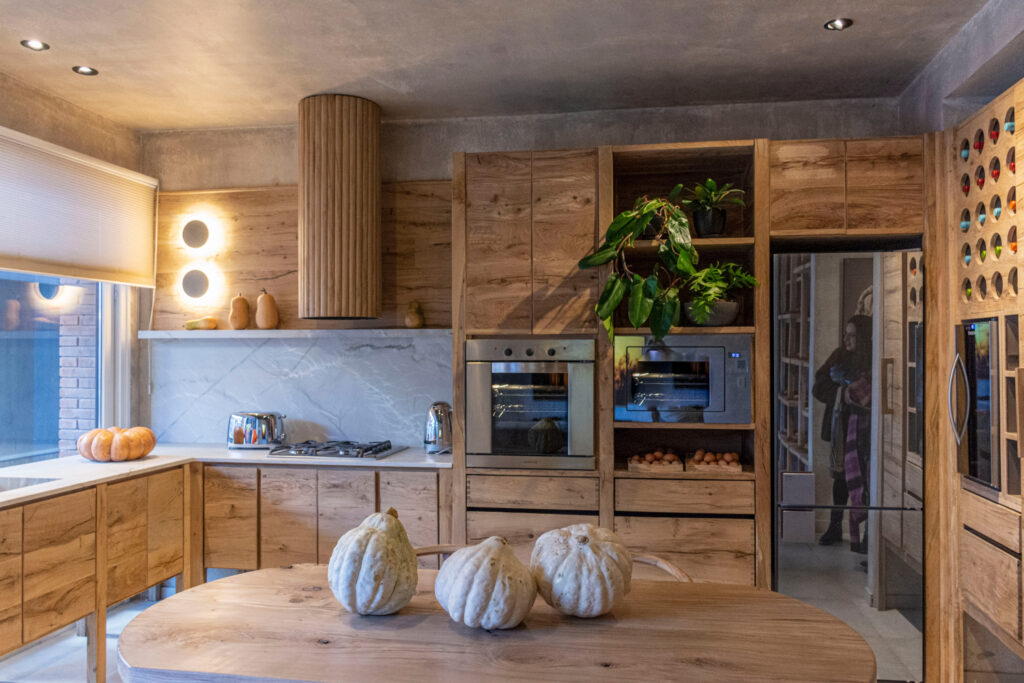
What’s changed is how these natural hues are supported. Designers are pairing them with tight reveals, flatter door profiles, and cleaner transitions. The restraint keeps these palettes from drifting into farmhouse territory.
Warm Metals
Brass, bronze, and champagne finishes have become baseline choices. The move away from chrome is less about trend fatigue and more about how warm metals interact with evolving color palettes and wood tones. The opportunity here is intentional specificity. Not all brass belongs everywhere. Softer, brushed finishes feel at home in organic palettes, while darker bronzes anchor moody kitchens with depth. Hardware is doing quieter design work now, tying together materials rather than standing out as decoration.
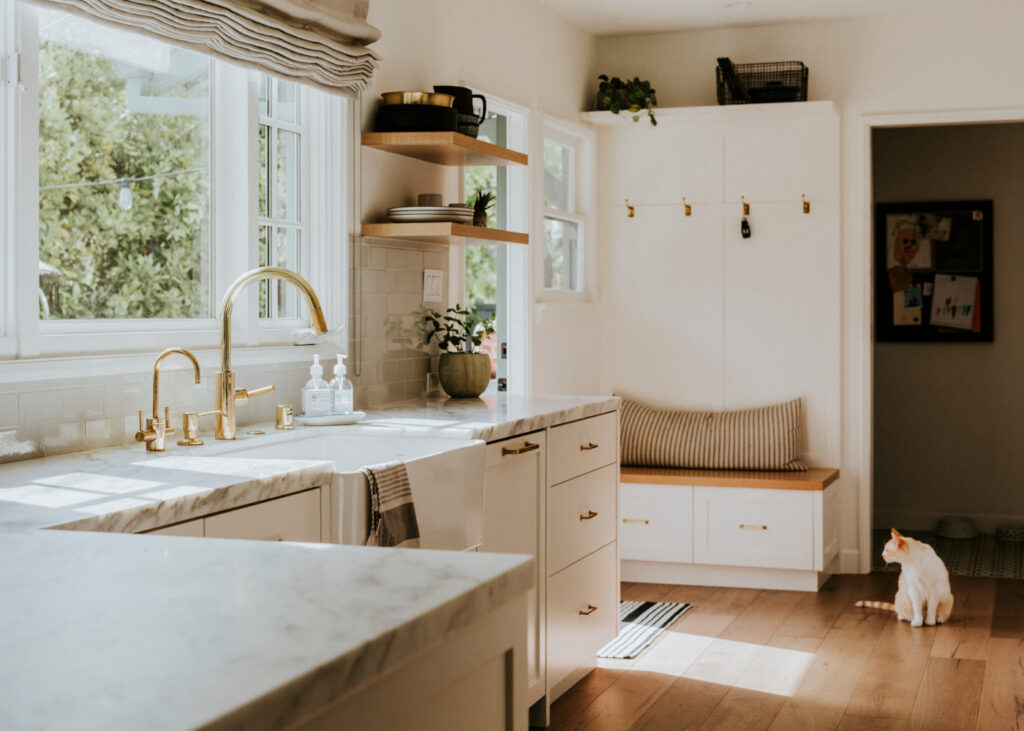
Satin brass, heirloom brass, and brushed champagne finishes were widely represented at KBIS, particularly in appliance hardware, plumbing fixtures, and cabinet pulls. Baldwin Hardware’s Heirloom Brass finish and Café Appliances’ aged brass appliance handles, developed in collaboration with Rejuvenation, were standout examples. In bathrooms, these finishes are pairing particularly well with softer fixture silhouettes. Brizo’s Roccesco collection, with its circular raincan shower head and curved spouts, demonstrates how warm metals and rounded forms are working together to create calmer, more sculptural spaces.
Two-Tone Cabinetry Grows Up
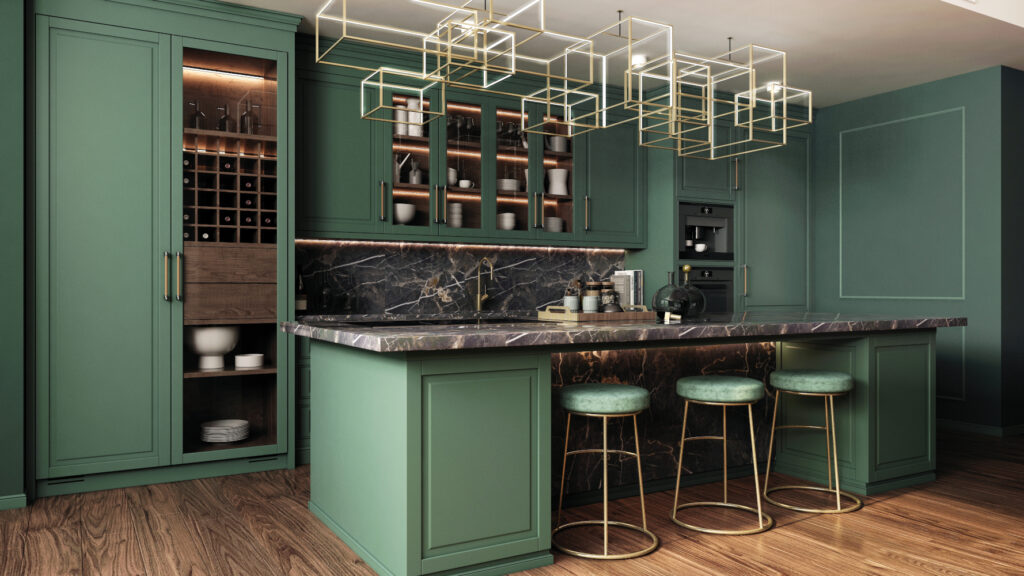
Two-tone kitchens are no longer about contrast for contrast’s sake. The more sophisticated versions layer tone instead of fighting it. Think wood lowers with painted uppers in related undertones, or islands that shift value without changing hue.
Cabinet manufacturers are also leaning into this layered approach. At KBIS, brands introduced finishes like pistachio green, canyon oak, and deep espresso stains designed to mix rather than match. Color is also appearing in unexpected places. Richelieu’s Atipica hardware collection, with its bold blue, green and orange finishes, suggests a growing appetite for personality in small doses.
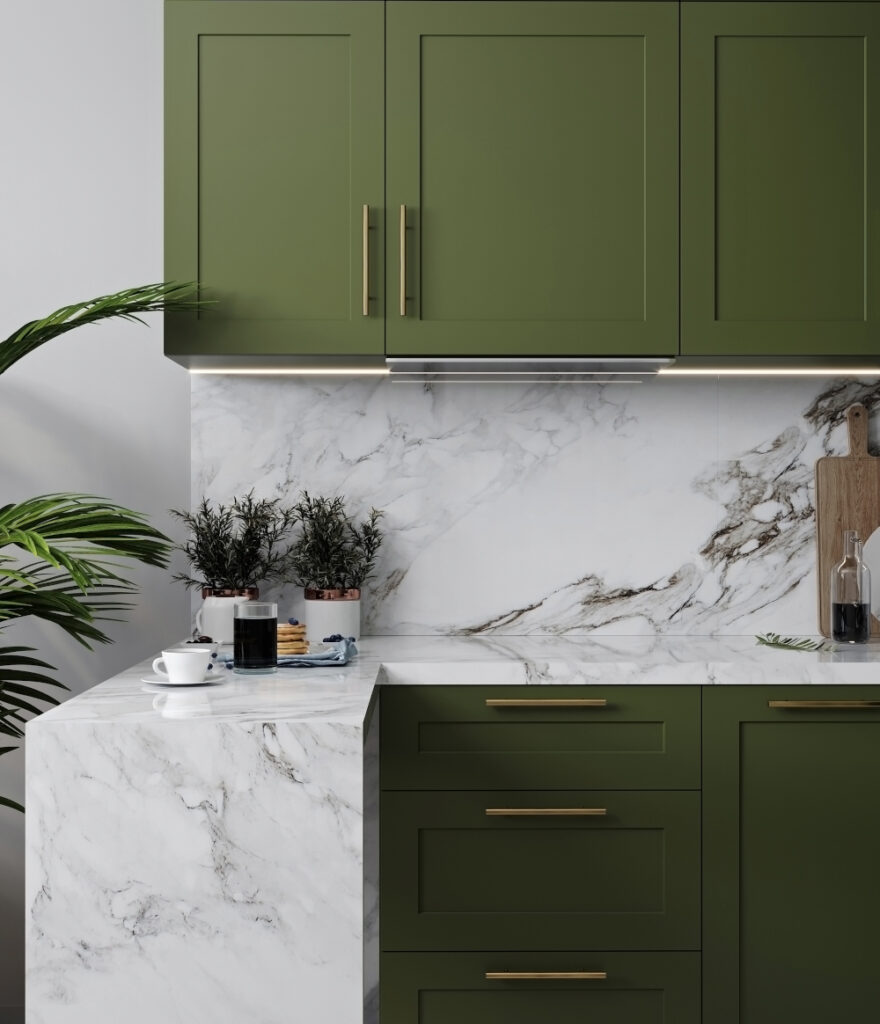
Deep greens, inky blues, and warm neutrals are leading because they maintain their depth and personality in both natural and artificial light. Designers are also using two-tone strategies to solve spatial problems, grounding large footprints or visually lifting heavy millwork.
Storage Is the New Flex
The continued emphasis on pantries, coffee stations, and bar zones speaks to how kitchens are being lived in. Clients want frictionless mornings, hidden clutter, and moments of delight baked into daily routines.
Product innovation is responding directly to this demand. At KBIS, Fabuwood introduced the InFocus charging drawer, a wireless charging system incorporated directly into cabinetry using FreePower technology. Hettich showcased FurnSpin cabinetry, which rotates 180 degrees to reveal hidden storage or display shelving. These kind of features reinforce a broader design principle that storage should work harder while remaining invisible.
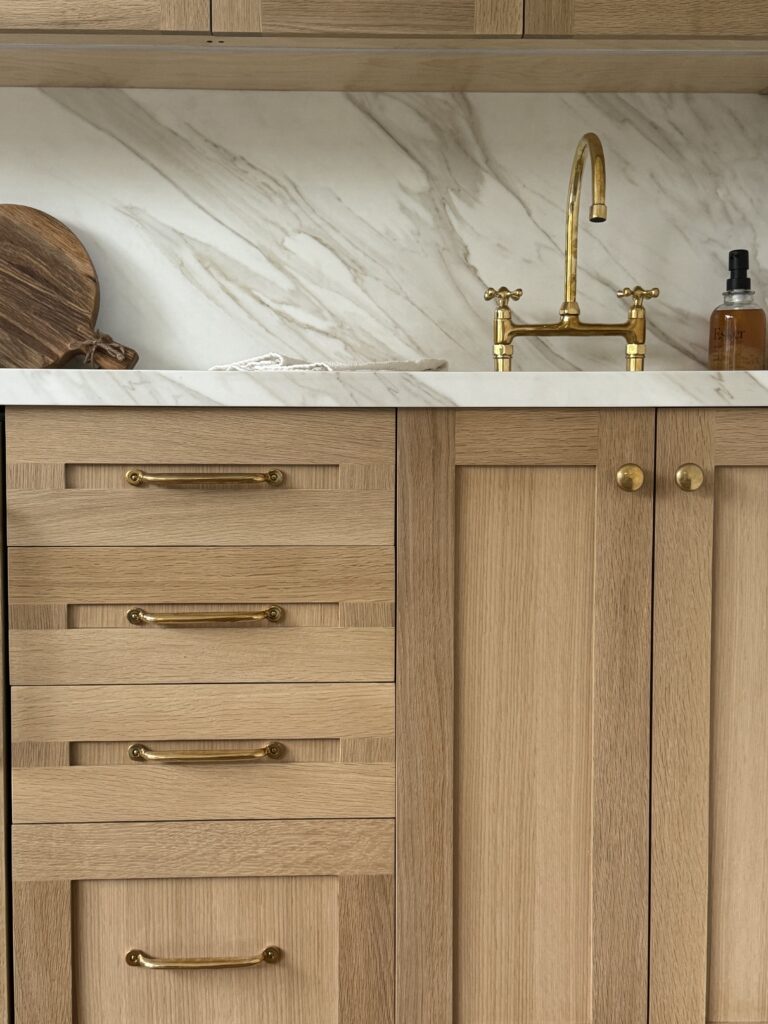
The design challenge is seamless integration. Flush cabinetry, concealed pocket doors, and consistent material language can keep these utility spaces from fragmenting the kitchen.
Workhorse Sinks
One of the clearest product trends at KBIS was the sink as a multitasking hub. Workstation sinks with ledges, sliding accessories, and expanded basin sizes are turning the sink zone into a prep, rinse, and serving station all in one. Across both kitchens and baths, the sink is becoming a focal point where performance and design intersect, prompting designers to think about the area as workflow infrastructure rather than leftover counter space.
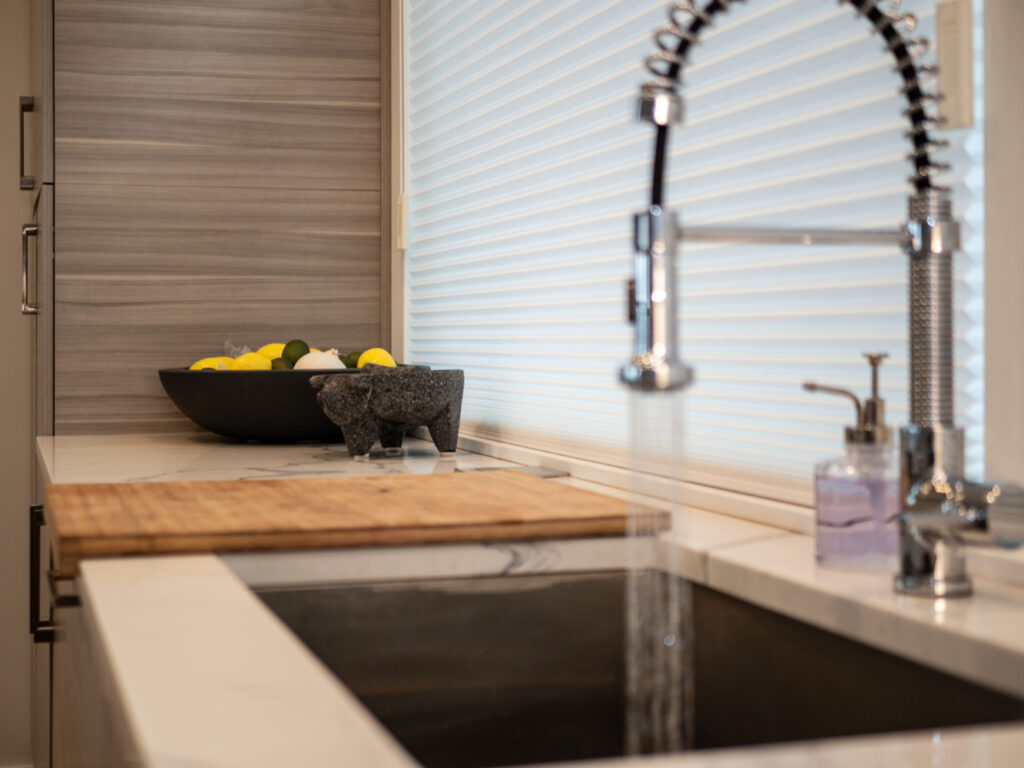
Kohler’s new Synthos workstation sink, available in widths up to 72 inches, was designed specifically to support continuous workflows between prepping, rinsing, and plating. Ruvati’s Ibiza workstation sink, which includes a built-in glass rinser, adds another layer of convenience while preserving counter space. In the bath, a similar mindset is emerging with vessel sinks in materials like glazed steel, concrete, and fireclay designed as sculptural centerpieces rather than simple basins.
Command Center Islands
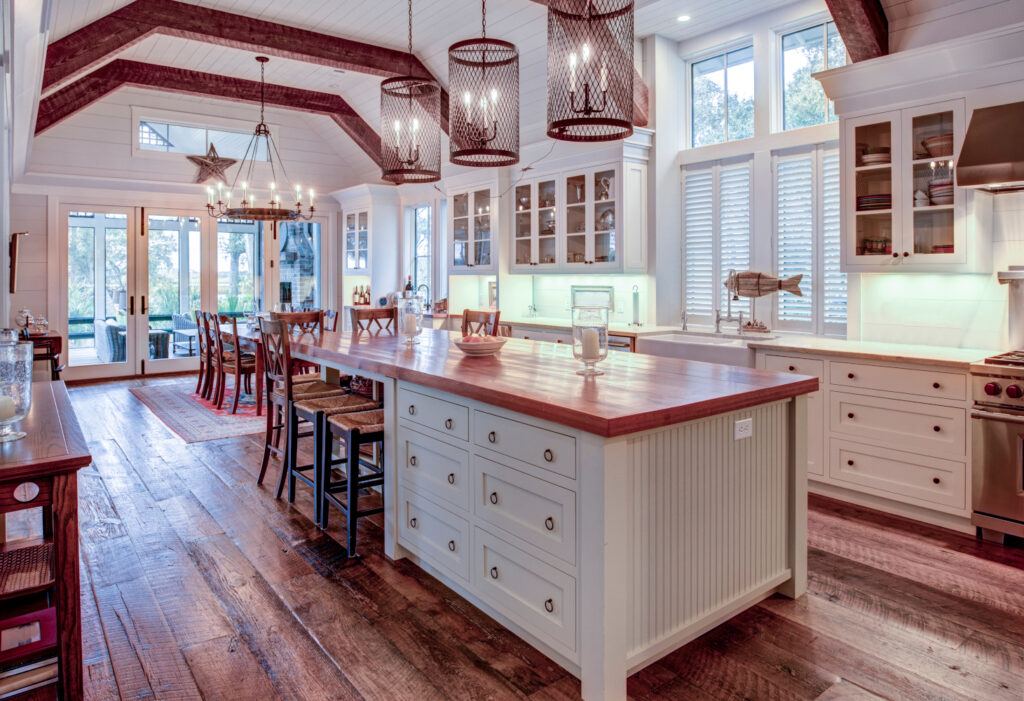
Oversized, multi-use islands are no longer optional in high-function kitchens. They’re the command centers. Prep, dining, working, hosting, and charging devices all happen here. Designers are responding by giving islands more architectural weight with thicker countertops, furniture-style bases, layered lighting, and serious storage.
Technology is also gravitating toward the island. Cosentino demonstrated induction cooking combined with its Dekton surfaces through its partnership with Invisacook, allowing pots and pans to sit directly on a countertop without visible burners. These kinds of upgrades allow the island to function as both culinary workspace and digital hub while maintaining visual calm.
Borderless Tech
Speaking of technology, it was everywhere at KBIS. But the real story was how seamlessly we see it being blended with design. Designers are embracing what manufacturers are calling “borderless design,” where appliances, storage, and surfaces merge into one continuous visual field.
Appliances are disappearing into cabinetry with flush panels and zero-clearance hinges. LG Signature’s Seamless appliance collection exemplifies this approach, with refrigerators and dishwashers designed to blend directly into surrounding millwork. AI is also beginning to shape the kitchen experience. GE’s Smart 4-Door French-Door Refrigerator can track grocery inventory and generate shopping lists, while AI-powered ovens with built-in cameras monitor cooking progress in real time.
In the bathroom, technology is increasingly tied to wellness. Kohler’s Dekoda sensor analyzes hydration and gut health through data captured in the toilet bowl, while innovations like the Anthem EvoCycle smart shower recirculate and filter water to reduce consumption. Meanwhile, UV-sanitizing bidet seats and fixtures are bringing hospital-grade hygiene features into everyday residential bathrooms.
Statement Moments
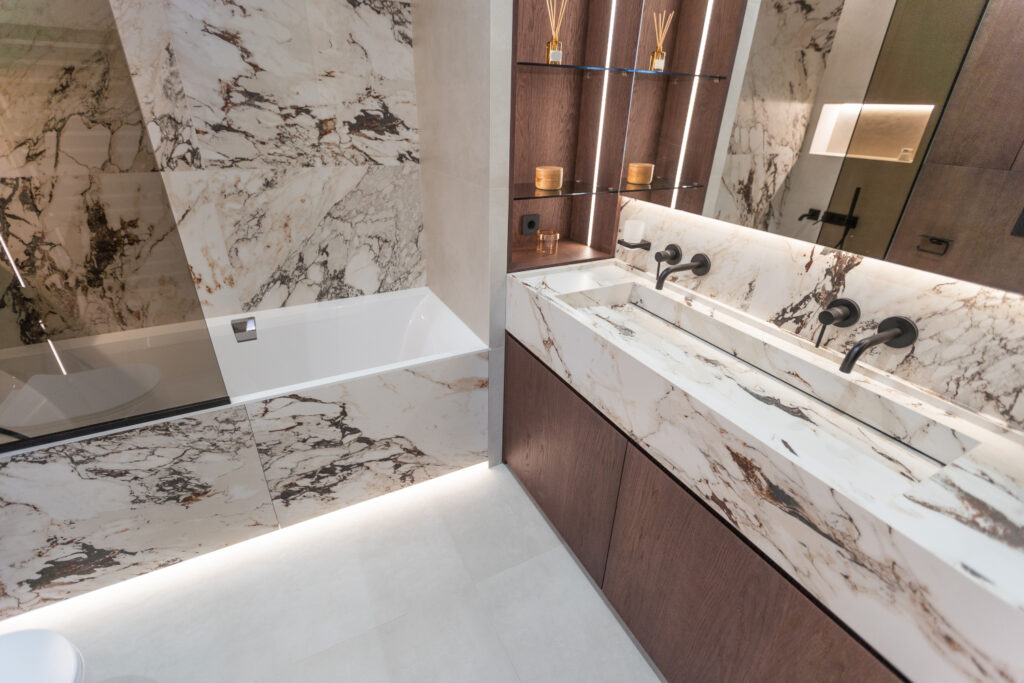
Instead of overwhelming the entire space with drama, designers are concentrating impact, i.e. a bold backsplash, textured stone wall, or run of zellige behind open shelving. These moments anchor the room and give the eye somewhere to land.
Material innovation is expanding these possibilities. Cosentino’s new Éclos mineral surface line, with its crystalline layered structure, introduces a three-dimensional effect that feels closer to natural stone than traditional engineered materials. Large-format quartzite slabs, textured tiles, and patterned stone installations are also giving designers more ways to create controlled drama without overwhelm.
Where Design Meets Performance
Across all of these trends is a clear throughline. Kitchens and bathrooms are being designed for longevity and livability. Warmth, flexibility, and subtle complexity are winning because they support real life and real clients. The most interesting takeaway from KBIS this year is not any single product. It is the growing alignment between design and performance.
Let this be an invitation to slow down choices, refine palettes, and be more intentional with contrast. The kitchens that will age best are the ones grounded in strong materials and disciplined detailing, even when the palette is layered and expressive.
SOURCES: Kitchen & Bath Design, Builder, Kitchen & Bath Business, Houzz, Business of Home